
Steps Involved in SMT Assembly
Compared to through-hole technology, which uses leads that pass through holes on a PCB and are soldered on the other side, SMT is more compact and more efficient. It also allows for more components to be placed on a single board. This is why SMT is used in virtually every modern electronic device.
To begin the process, the bare PCB is loaded onto a feeder that automatically sends each one through a transmission rod into a solder paste printing machine. The machine has an smt assembly stencil with silkscreen printing that prints the solder paste on the bare PCB. Then the PCB is halted under the stencil, and scraper presses the paste into the corresponding solder pads on the PCB. The next step involves the use of an automated pick and place machine to add individual electronic components, such as transistors or resistors, onto each pad. The machine places each component in the correct location according to the design files. This step is extremely important to avoid mistakes that can lead to failure of the finished product.
Once the components are properly placed, the resulting PCB is sent to a reflow soldering machine (sometimes called a reflow oven). The heated machines melt the solder paste on each pad, making it stick to the small components. This process is done in a controlled environment to ensure quality and consistency.
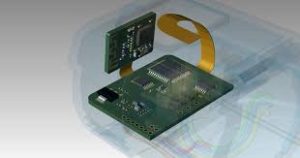
What Are the Steps Involved in SMT Assembly?
After the soldering process is complete, the reflow-soldered PCB goes through an inspection. This is a crucial part of the SMT process because it determines whether or not the assembled electronic devices will work as designed. This can be accomplished by using a variety of tools, including automated optical inspection (AOI) with a microscope and SMT X-ray equipment, visual inspection, performance inspection by online testers or first article testers, and more.
Finally, the SMT-assembled PCBs will go through a cleaning process to remove any residual flux residue or contaminants. This is especially important for products that require no-clean soldering, as a buildup of flux residues can lead to corrosion and poor performance. The cleaned PCBs will be packaged and shipped to their final destination.
SMT is an extremely efficient way to create a printed circuit board and is widely used in today’s electronics because it can be produced much faster than through-hole technology. The process is also less prone to human error because it relies on machines for all of its steps. However, as with any manufacturing method, there are always opportunities for problems to arise.
That’s why it’s important to use a reliable SMT assembly partner that offers quality control and traceability for each order. This will help you avoid the most common defects that can occur in SMT assembly. These problems include misplaced components, incorrect placements, and incomplete or inaccurate assemblies. Fortunately, these problems can be quickly fixed by a team of experts. SMT rework is often cheaper than through-hole repair and can save you time and money. It is also a more environmentally friendly option.