
flexible printed circuit manufacturers manage logistics
Meeting design specifications is crucial for flexible printed circuit (FPC) manufacturers, as these circuits are integral to a wide range of high-performance applications, including consumer electronics, automotive systems, medical devices, and aerospace technologies. Ensuring that FPCs meet the precise design requirements set by engineers, customers, or industry standards involves a combination of advanced design tools, rigorous quality control, precise manufacturing techniques, and continuous testing throughout the production process. Manufacturers must address various factors such as electrical performance, mechanical flexibility, thermal management, and environmental durability to ensure that the final product aligns with the specifications.
The design phase is the first step in meeting flexible printed circuit manufacturers design specifications. Manufacturers rely on computer-aided design (CAD) and electronic design automation (EDA) software to create detailed circuit layouts and simulate their behavior before production begins. These tools allow designers to define key parameters such as trace width, trace spacing, impedance control, and component placement. The software can simulate various performance characteristics, such as signal integrity, power distribution, and thermal performance, ensuring that the FPC meets the required electrical specifications. Designers also input material choices and manufacturing tolerances to ensure that the final product meets mechanical, thermal, and electrical performance requirements. This phase is essential for identifying potential issues early in the design process and adjusting the layout to ensure that all specifications are met.
Once the design is finalized, manufacturers move to material selection, which plays a critical role in meeting the design specifications. Flexible printed circuits are typically made from materials like polyimide (PI) or polyester (PET), both of which offer different properties for various applications. Polyimide is preferred for its excellent thermal stability, electrical properties, and mechanical strength, while PET is more cost-effective and suitable for less demanding applications. Manufacturers carefully select materials based on the intended environment, including factors like temperature range, moisture resistance, and flexibility. The choice of copper for the conductive traces is also critical, as high-quality copper ensures efficient electrical conductivity and the ability to handle high-frequency signals without excessive losses.
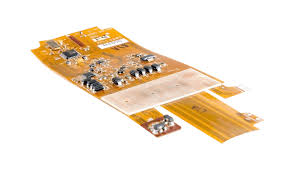
How do flexible printed circuit manufacturers manage logistics?
The next step is the actual manufacturing process, where precision is essential to ensure the FPC meets the design specifications. Techniques like photolithography, laser etching, and high-precision drilling are used to create the fine traces, vias, and holes required for the design. Photolithography, for example, transfers the circuit pattern onto the substrate material using light exposure and chemical etching, while laser etching enables even finer, more detailed traces, which are often necessary for high-density designs. These techniques ensure that the traces are of the correct width and spacing, which is crucial for controlling impedance and avoiding issues such as crosstalk or signal degradation in high-speed applications.
During the manufacturing process, FPC manufacturers also ensure that the substrates are free of defects and that the layers are properly aligned. This requires precise lamination and curing techniques, which bond the layers together while maintaining the flexibility of the circuit. Advanced equipment is used to ensure the correct bonding process and to verify that the circuit maintains its structural integrity and electrical performance throughout its construction.
After the circuit is manufactured, manufacturers conduct thorough testing to verify that it meets all the design specifications. This includes electrical testing, such as continuity checks, impedance measurement, and signal integrity analysis, to ensure that the FPC performs as expected in terms of electrical performance. Mechanical testing is also performed, especially for flexible circuits that will be subjected to bending, twisting, or stretching. These tests simulate the mechanical stresses that the circuit may encounter in real-world applications and help ensure that the FPC can withstand these conditions without failure.
In addition to electrical and mechanical testing, thermal testing is often conducted to ensure that the FPC can handle temperature fluctuations without compromising performance. This is especially important for FPCs used in automotive, aerospace, or industrial applications, where components may be exposed to extreme temperature changes. Manufacturers subject the FPC to thermal cycling and high-temperature storage tests to ensure that the circuit will perform reliably under these conditions.
Finally, rigorous quality control processes are in place throughout the entire production process to ensure that the FPC meets the design specifications. Automated optical inspection (AOI) systems are used to check for defects such as misaligned components, soldering issues, or trace irregularities. X-ray inspection is used to examine multi-layer circuits for hidden defects or faults in vias and connections. These inspection techniques help ensure that only high-quality, specification-compliant FPCs are delivered to customers.
In conclusion, flexible printed circuit manufacturers meet design specifications through a combination of advanced design tools, material selection, precision manufacturing techniques, and rigorous testing. By carefully managing each step of the design and manufacturing process, manufacturers can ensure that their FPCs meet the electrical, mechanical, and environmental requirements of their applications. Through ongoing innovation and quality control, they continue to produce high-performance FPCs that are capable of meeting the demanding specifications of modern electronic systems.